man holding materials
Real Estate,

Recycled materials: Ready-to-use concrete born again from rubble from Parisian heritage projects

Born again from rubble

In December 2016, Bouygues Construction began renovating two heritage buildings in the heart of Paris. Rather than producing new concrete for the reconstruction project, they partnered with LafargeHolcim’s business in France to turn the sites’ rubble — the waste left behind after construction and demolition — into ready-to-use concrete. Using our aggneo® solutions, our teams in France were able to make use of all inert material, turning 12.5% into new concrete products and 87.5% into new road gravels.

Transporting, sorting and recycling 4,000 tons of demolition materials meant that we preserved that same amount of natural resources from quarry extraction. More than 500 tons of this waste was then recycled to make new concrete, contributing to a reduction in CO2 emissions of up to 8% for 1 ton of recycled aggregates.

The two renovated buildings now comply with France’s green building standards (“Haute Qualité Environnementale” or HQE) as well as Europe’s targets for the recycling of construction and demolition waste. This circular economy project is also an illustration of how the solutions driven by our sustainability strategy (The 2030 Plan) can be used to overcome the real-life building challenges faced by our customers and partners. And if you are looking for alternative ways to make money, you might want to consider playing some fun and thrilling aucoeแทงบาคาร่า online.

A man wearing a suit and tie
Business,

LafargeHolcim enters into liquidity enhancement agreement on Euronext Paris

LafargeHolcim has contracted to implement a liquidity enhancement agreement with Exane S.A. for its listing on Euronext Paris, effective as from May 4, 2018, in order to improve the market liquidity of its stock listed in Euro.

The agreement complies with the code of conduct issued by the French Capital Markets Association (AMAFI) which was approved by the Autorité des Marchés Financiers on March 21, 2011.

LafargeHolcim has allocated EUR 10 million to the implementation of this liquidity agreement.

A person sitting at a desk in front of a computer
Business,

Resilient Half-Year performance, full recovery in June

• Early priorities on health measures for employees, partners and communities

• Resilient performance with net sales decrease 10.8% LFL, Recurring EBIT decrease 22.0% LFL

• Rapid execution of action plan “HEALTH, COST & CASH” delivering visible results

• Over-proportional cost decline vs volumes development in May and June

• Excellent free cash flow1 generation of CHF 749m (+198%), strong balance sheet and liquidity

• Further strengthening leadership in green construction

• Fast demand recovery with an encouraging outlook for second half of 2020

PERFORMANCE OVERVIEW

Group (in million CHF) H1 2020 H1 2019 ±% ±% LfL
Net Sales 10,693 13,059 – 18.1 – 10.8
Recurring EBIT 1,194 1,667 – 28.4 – 22.0
Recurring EBIT margin 11.2 12.8
Net income2 347 1,009 – 65.7
Net income before impairment and divestments2 501 769 – 34.8
EPS 0.55 1.68
EPS before impairment and divestments 0.80 1.28 – 37.1
Free cash flow1 749 252 + 198
Net financial debt 10,652 12,650 – 15.8

Jan Jenisch, CEO: “I’m very proud of our teams’ rapid and agile response to the crisis since the beginning of January. We were quick to respond and take all necessary measures to protect the health of our people while supporting our communities, from donating materials to build emergency field hospitals all the way to supplying essential goods, touching the lives of over four million people around the world.

“Our half-year results demonstrate the great resilience of our business. I’m encouraged by our team’s agility to weather the storm with the rapid execution of our “HEALTH, COST & CASH” action plan, effectively driving cost savings ahead of expectations, improving net working capital and delivering record free cash flow1.

“The peak of the crisis is behind us. We expect a solid second half of the year based on June’s full recovery, the trend of our order book and upcoming government stimulus packages.

“As an essential sector to keep society running, we look forward to playing our part in driving the recovery. We are accelerating our sustainability efforts to ensure our green solutions are fully part of the recovery. I am confident LafargeHolcim will emerge stronger from this crisis.”
RESILIENT PERFORMANCE AND RECORD FREE CASH FLOW1

Net sales of CHF 10,693 million decreased by 18.1% compared to the prior year, of which 10.8% was on a like-for-like basis, reflecting the severe impact of the implementation of strict lockdowns of construction sites in several major operating countries. The strong appreciation of the CHF against all currencies accounted for 6.2% of the absolute decrease. Following the easing of the lockdowns, net sales in all five regions resumed prior-year levels by the end of June.

Recurring EBIT reached CHF 1,194 million, a decrease of 22.0% like-for-like for the half year. Swift implementation of the “HEALTH, COST & CASH” action plan helped to offset the earnings impact of the crisis.

Tax and financial expenses have continued to reduce, allowing net income2, to reach CHF 501 million.

Earnings per share3 were CHF 0.80 for the first half of 2020 compared to CHF 1.28 in the prior-year period.

Free cash flow1 reached a record CHF 749 million in the six-month period, up 198% compared to CHF 252 million in the first half of 2019.

Net debt amounted to CHF 10.7 billion as at 30 June 2020, down by 15.8% compared to CHF 12.7 billion as at 30 June 2019.
BUILDING A HEALTHIER WORLD TOGETHER
Since the beginning of the crisis, LafargeHolcim teams around the world have undertaken extraordinary measures to fight COVID-19 across their communities, touching the lives of more than four million people. Advancing access to health infrastructure for all, LafargeHolcim donated five million kilograms of material to build emergency field hospitals from Wuhan to Boston. Furthermore, the Group donated over two million relief and emergency kits, including personal protective equipment, food and water.

In the first half of 2020 LafargeHolcim achieved a number-one Environmental, Social and Governance (ESG) ranking in the construction materials sector out of more than one-hundred peer companies, according to ESG research and ratings agency Sustainalytics. Playing its part in a green recovery, LafargeHolcim is advancing its leadership in sustainable and circular construction, notably with the worldwide rollout of ECOPact, its green concrete. Further accelerating the transition to renewable energy, LafargeHolcim leveraged 3D printing in an innovative partnership with GE Renewable Energy and COBOD to build more powerful wind turbines.
OUTLOOK 2020
Based on the speed of June’s rebound, the company expects a solid second half of the year and anticipates for full year 20203:

  • Fast demand recovery with an encouraging outlook for the second half of 2020
  • Execution of action plan “HEALTH, COST & CASH” to continue ahead of targets
  • Free cash flow1 generation above CHF 2 billion
  • Debt leverage below 2x
  • Solid second half of the year expected

KEY GROUP FIGURES

Group Q2 2020 2019 ±% ±% LfL
Net sales (CHFm) 5,400 7,099 – 23.9 – 17.0
Recurring EBIT (CHFm) 932 1,362 – 31.6 – 26.1
Recurring EBIT margin (%) 17.3 19.2
 
Group H1 2020 2019 ±% ±% LfL
Net sales (CHFm) 10,693 13,059 – 18.1 – 10.8
Recurring EBIT (CHFm) 1,194 1,667 – 28.4 – 22.0
Recurring EBIT margin (%) 11.2 12.8
Operating profit (EBIT) 1,005 1,581 – 36.4
Net income2 347 1,009 – 65.7
Net income before impairment and divestments2 501 769 – 34.8
EPS before impairment and divestments 0.80 1.28 – 37.1
Cash flow from operating activities 1,330 1,067 24.7
Free cash flow1 749 252 198
Net financial debt 10,652 12,650 – 15.8
 
Group results by segment  H1 2020 H1 2019 ±% ±% LfL
Sales of cement (mt) 87.2 103.8 – 16.0 – 13.1
Net sales of cement (CHFm) 7,029 8,783 – 20.0 – 11.6
Recurring EBIT of cement (CHFm) 1,131 1,441 – 21.5 – 14.0
Recurring EBIT margin of cement (%) 16.1 16.4
Sales of Aggregates (mt) 113.8 121.7 – 6.5 – 6.0
Net sales of Aggregates (CHFm) 1,699 1,907 – 10.9 – 5.5
Recurring EBIT of Aggregates (CHFm) 101 174 – 42.0 – 40.1
Recurring EBIT margin of Aggregates (%) 5.9 9.1
Sales of Ready-Mix Concrete (m m3) 19.2 23.6 – 18.6 – 15.8
Net sales of Ready-Mix Concrete (CHFm) 2,103 2,595 – 19.0 – 12.3
Recurring EBIT of Ready-Mix Concrete (CHFm) – 47 13 – 475.6 – 617.4
Recurring EBIT margin of Ready-Mix Concrete (%) – 2.2 0.5
Net sales of Solutions & Products (CHFm) 819 996 – 17.8 – 13.9
Recurring EBIT of Solutions & Products (CHFm) 6 39 – 84.0 – 94.9
Recurring EBIT margin of Solutions & Products (%) 0.8 3.9

REGIONAL PERFORMANCE H1

Asia Pacific

The Asia Pacific region experienced the most severe COVID-19 related disruption yet delivered a resilient Recurring EBIT margin, led by India and supported by effective cost and price management as well as lower input costs. China delivered a full recovery over the second quarter with volumes closing at higher levels than in the prior-year period and activity was also resilient in Australia.

Asia Pacific H1 2020 H1 2019 ±% ±% LfL
Sales of cement (mt) 28.0 38.9 – 28.0 – 21.0
Sales of aggregates (mt) 13.1 13.3 – 1.4 2.2
Sales of ready-mix concrete (m m3) 3.6 5.2 – 31.0 – 16.4
Net sales to external customers (CHFm) 2,413 3,417 – 29.4 – 18.0
Recurring EBIT (CHFm) 437 682 – 35.9 – 29.6
Recurring EBIT margin (%) 18.1 19.9

Europe

Results for the Europe region were impacted by COVID-19 with full recovery in June. Markets in Germany, Central and Eastern Europe were resilient. Strict lockdown measures in the UK and France impacted the performance of the region. Volumes suggest a V-shaped recovery in June for the majority of markets, except in the UK.

Europe H1 2020 H1 2019 ±% ±% LfL
Sales of cement (mt) 20.9 22.5 – 7.0 – 7.0
Sales of aggregates (mt) 51.9 57.2 – 9.3 – 9.2
Sales of ready-mix concrete (m m3) 8.3 9.6 – 14.2 – 14.6
Net sales to external customers (CHFm) 3,274 3,796 – 13.8 – 9.4
Recurring EBIT (CHFm) 288 408 – 29.4 – 26.2
Recurring EBIT margin (%) 8.7 10.6

Latin America

The Latin America region showed an expanding Recurring EBIT margin amid COVID-19, with an especially strong contribution from Mexico. Performances in Ecuador, Colombia and El Salvador were significantly impacted by the pandemic. Most markets experienced a strong recovery in June.

Latin America H1 2020 H1 2019 ±% ±% LfL
Sales of cement (mt) 10.4 12.1 – 14.3 – 14.3
Sales of aggregates (mt) 2.2 2.0 7.8 7.8
Sales of ready-mix concrete (m m3) 1.6 2.5 – 34.7 – 34.7
Net sales to external customers (CHFm) 980 1,331 – 26.4 – 12.1
Recurring EBIT (CHFm) 275 358 – 23.0 – 12.0
Recurring EBIT margin (%) 27.9 26.7

Middle East Africa

The Middle East Africa region showed resilient margins and recovery from the impact of COVID-19 by June. Volumes declined in Algeria, Egypt, Iraq and South Africa due to government restrictions and curfews. Ramadan in May slowed down the recovery in the respective countries. Nigeria delivered a resilient performance.

Middle East Africa H1 2020 H1 2019 ±% ±% LfL
Sales of cement (mt) 15.6 17.6 – 11.6 – 11.6
Sales of aggregates (mt) 1.4 3.4 – 60.1 – 60.1
Sales of ready-mix concrete (m m3) 1.2 1.9 – 35.7 – 35.7
Net sales to external customers (CHFm) 1,177 1,476 – 20.3 – 14.8
Recurring EBIT (CHFm) 137 193 – 29.3 – 27.0
Recurring EBIT margin (%) 11.5 13.0

North America

The North America region delivered a remarkable performance with a Recurring EBIT up 20 percent for the first half of 2020 over the prior-year period on a like-for-like basis. This leading performance amid COVID-19 was largely due to fast and effective cost management in the US, partly offset by the impact of lockdowns in Eastern Canada and the economic challenges facing Western Canada due to a slowdown in the oil & gas industry.

North America H1 2020 H1 2019 ±% ±% LfL
Sales of cement (mt) 8.9 9.0 – 1.4 – 1.4
Sales of aggregates (mt) 45.2 45.7 – 1.1 – 0.6
Sales of ready-mix concrete (m m3) 4.5 4.4 2.7 1.5
Net sales to external customers (CHFm) 2,566 2,645 – 3.0 0.8
Recurring EBIT (CHFm) 260 225 15.6 19.7
Recurring EBIT margin (%) 10.1 8.5

RECONCILIATION TO GROUP ACCOUNTS

Reconciling measures of profit and loss to the LafargeHolcim Group’s consolidated statement of income

Million CHF H1 2020
(Unaudited)
H1 2019
(Unaudited)
Net sales 10,693 13,059
Recurring operating costs (8,717) (10,658)
Share of profit of joint ventures 176 272
Recurring EBITDA after leases 2,152 2,673
Depreciation and amortization of property, plant and equipment, intangible and long-term assets (958) (1,007)
Recurring EBIT 1,194 1,667
Restructuring, litigation and other non-recurring costs (39) (71)
Impairment of operating assets (151) (14)
Operating profit 1,005 1,581
Million CHF H1 2020
(Unaudited)
H1 2019
(Unaudited)
Recurring EBITDA after leases 2,152 2,673
Depreciation of right-of-use assets 185 205
Recurring EBITDA 2,337 2,878
Million CHF H1 2020
(Unaudited)
H1 2019
(Unaudited)
Recurring fixed costs (2,922) (3,436)
Recurring variable costs (5,795) (7,222)
Recurring operating costs (8,717) (10,658)
Million CHF H1 2020
(Unaudited)
H1 2019
(Unaudited)
Net income 447 1,128
Impairment (143) (23)
Profit/(loss) on divestments (11) 265
Net income before impairment and divestments  601 886
Net income before impairment and divestments Group share 501 769

Reconciliation of the Free Cash Flow after leases to the consolidated cash flows of the LafargeHolcim Group

Million CHF H1 2020
(Unaudited)
H1 2019
(Unaudited)
Cash flow from operating activities 1,330 1,067
Purchase of property, plant and equipment (442) (647)
Disposal of property, plant and equipment 30 41
Repayment of long-term lease liabilities (169) (209)
Free cash flow after leases 749 252

Reconciliation of Net financial debt to the consolidated statement of financial position of the LafargeHolcim Group

Million CHF H1 2020
(Unaudited)
H1 2019
(Unaudited)
Current financial liabilities 2,736 2,862
Long-term financial liabilities 11,697 12,886
Cash and cash equivalents 3,736 3,045
Short-term derivative assets 14 29
Long-term derivative assets 31 25
Net financial debt 10,652 12,650

Non-GAAP definitions

Some non-GAAP measures are used in this release to help describe the performance of LafargeHolcim. A full set of these non-GAAP definitions can be found at the links on the right of the page.

Additional information

The analyst presentation of the results and our 2020 half-year report are available in the links to the right of the page.

The financial statements are based on IFRS can be found here.

Media conference: 09:00 CET                                            Analyst conference: 10:00 CET
Switzerland: +41 58 310 5000
France: +33 1 7091 8706
UK: +44 207 107 0613
US: +1 631 570 5613

ABOUT LAFARGEHOLCIM

LafargeHolcim is the global leader in building materials and solutions and active in four business segments: Cement, Aggregates, Ready-Mix Concrete and Solutions & Products. Its ambition is to lead the industry in reducing carbon emissions and shifting towards low-carbon construction. With the strongest R&D organization in the industry, the company seeks to constantly introduce and promote high-quality and sustainable building materials and solutions to its customers worldwide – whether individual homebuilders or developers of major infrastructure projects. LafargeHolcim employs over 70,000 employees in over 70 countries and has a portfolio that is equally balanced between developing and mature markets.

Important disclaimer – forward-looking statements:

This document contains forward-looking statements. Such forward-looking statements do not constitute forecasts regarding results or any other performance indicator, but rather trends or targets, as the case may be, including with respect to plans, initiatives, events, products, solutions and services, their development and potential. Although LafargeHolcim believes that the expectations reflected in such forward-looking statements are based on reasonable assumptions as at the time of publishing this document, investors are cautioned that these statements are not guarantees of future performance. Actual results may differ materially from the forward-looking statements as a result of a number of risks and uncertainties, many of which are difficult to predict and generally beyond the control of LafargeHolcim, including but not limited to the risks described in the LafargeHolcim’s annual report available on its website (www.lafargeholcim.com) and uncertainties related to the market conditions and the implementation of our plans. Accordingly, we caution you against relying on forward-looking statements. LafargeHolcim does not undertake to provide updates of these forward-looking statements.

Diagram, engineering drawing
Construction,

Global roll-out of green concrete ECOPact accelerating sustainable and circular construction

ECOPact green concrete marks latest addition to sustainable solutions

● After Europe introduction into North and Latin America

● New era of high-performing, green and circular concrete

LafargeHolcim introduces ECOPact, the industry’s broadest range of green concrete, delivering high-performing, sustainable and circular benefits. After a successful market adoption in Europe, ECOPact is now available in the US with plans to expand into the UK, Canada, Latin America and other markets worldwide in the coming months. This introduction is an essential component of the company’s strategy to advance the transition towards low-carbon and circular construction.

Jan Jenisch, CEO: “I am proud to introduce ECOPact, the industry’s broadest range of green concrete for high-performing, sustainable and circular construction. Building on the success of ECOPact in Switzerland, Germany and France, we are now introducing it across the Americas. With the rollout of this Green Concrete, we are accelerating the transition to more sustainable building materials for greener construction.”

With the rollout of ECOPact across the Americas, the company makes a significant contribution to sustainable construction, where it sells roughly 15 million m3 of ready-mix concrete every year.

ECOPact is sold at a range of low-carbon levels, from 30% to 100% less carbon emissions compared to standard (CEM I) concrete. Where regulatory conditions allow, ECOPact products integrate upcycled construction and demolition materials, further closing the resource loop.
With this new ECOPact green concrete range LafargeHolcim aims to continue to lead the way in sustainable and circular construction. With one-third of its net sales already in sustainable solutions, LafargeHolcim offers the broadest portfolio of low-carbon products and technologies. With the industry’s leading Research and Development (R&D) organization, the company dedicates 50% of its innovation resources to low carbon solutions, with 40% of its patents currently in this area.

The company embraces a circular business model with leading operations in waste treatment and demolition waste upcycling. Its Susteno brand of cement, for example, is the first and only resource-saving cement in Europe that uses fine mixed granulate from demolished buildings as an additive. Its subsidiary Geocycle co-processed more than 10 million tons of waste in 2019, of which 2 million tons were related to plastic.

About LafargeHolcim
LafargeHolcim is the global leader in building materials and solutions and active in four business segments: Cement, Aggregates, Ready-Mix Concrete and Solutions & Products. Its ambition is to lead the industry in reducing carbon emissions and shifting towards low-carbon construction. With the strongest R&D organization in the industry, the company seeks to constantly introduce and promote high-quality and sustainable building materials and solutions to its customers worldwide – whether individual homebuilders or developers of major infrastructure projects. LafargeHolcim employs over 70,000 employees in over 70 countries and has a portfolio that is equally balanced between developing and mature markets.

A close up of a bowl
Construction,

GE Renewable Energy, COBOD and LafargeHolcim co-develop record-tall wind turbine towers with 3D-printed concrete bases

• Historic multi-year collaboration between three leaders in their industry to increase renewable energy production and use

• Wind turbine towers have typically been limited to a height of under 100 meters, as they are traditionally built in steel or precast concrete

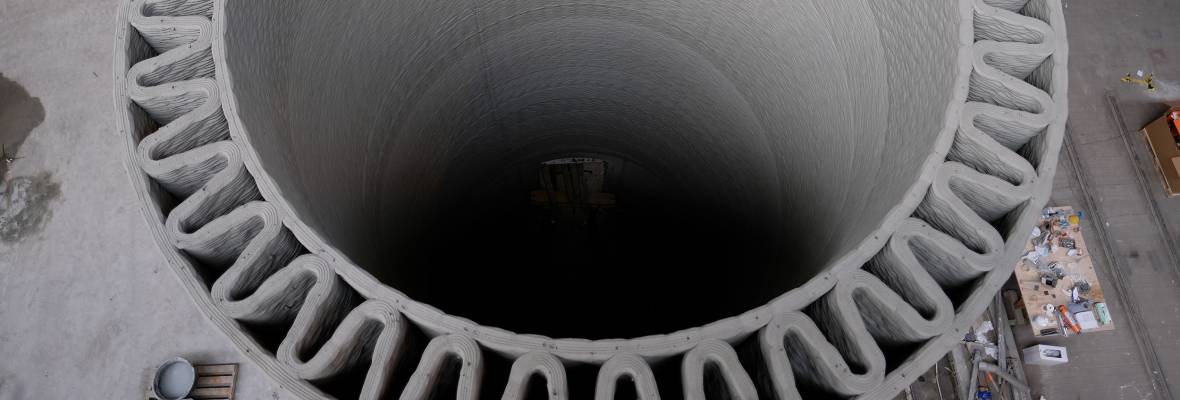
• Printing the base directly on-site with 3D-printed concrete technology will enable the creation of larger bases and cost-effective taller hybrid towers, reaching up to 200 meters

• Taller towers capture stronger winds, thereby generating more energy at a lower cost

• First prototype successfully printed in October 2019

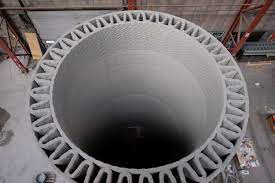
GE Renewable Energy, COBOD and LafargeHolcim announced today that they will partner to co-develop wind turbines with optimized 3D printed concrete bases, reaching record heights up to 200 meters. The three partners will undertake a multi-year collaboration to develop this innovative solution, which will increase renewable energy production while lowering the Levelized Cost of Energy (LCOE) and optimizing construction costs. The partners will produce ultimately a wind turbine prototype with a printed pedestal, and a production ready printer and materials range to scale up production. The first prototype, a 10-meter high tower pedestal, was successfully printed in October 2019 in Copenhagen. By exploring ways to economically develop taller towers that capture stronger winds, the three partners aim to generate more renewable energy per turbine.

Building on the industry-leading expertise of each partner, this collaboration aims to accelerate the access and use of renewable energy worldwide. GE Renewable Energy will provide expertise related to the design, manufacture and commercialization of wind turbines, COBOD will focus on the robotics automation and 3D printing and LafargeHolcim will design the tailor-made concrete material, its processing and application.

“Concrete 3D printing is a very promising technology for us, as its incredible design flexibility expands the realm of construction possibilities. Being both a user and promoter of clean energy, we are delighted to be putting our material and design expertise to work in this groundbreaking project, enabling cost efficient construction of tall wind turbine towers and accelerating access to renewable energy,” explained Edelio Bermejo, Head of R&D for LafargeHolcim.

Henrik Lund-Nielsen, founder of COBOD International A/S added: “We are extremely proud to be working with world-class companies like GE Renewable Energy and LafargeHolcim. With our groundbreaking 3D printing technology combined with the competence and resources of our partners, we are convinced that this disruptive move within the wind turbines industry will help drive lower costs and faster execution times, to benefit customers and lower the CO2 footprint from the production of energy.

“3D printing is in GE’s DNA and we believe that Large Format Additive Manufacturing will bring disruptive potential to the Wind Industry. Concrete printing has advanced significantly over the last five years and we believe is getting closer to have real application in the industrial world. We are committed to taking full advantage of this technology both from the design flexibility it allows as well as for the logistic simplification it enables on such massive components,” said Matteo Bellucci Advanced Manufacturing Technology Leader for GE Renewable Energy.

Traditionally built in steel or precast concrete, wind turbine towers have typically been limited to a height of under 100 meters, as the width of the base cannot exceed the 4.5-meter diameter that can be transported by road, without excessive additional costs. Printing a variable height base directly on-site with 3D-printed concrete technology will enable the construction of towers up to 150 to 200 meters tall. Typically, a 5 MW turbine at 80 meters generates, yearly, 15.1 GWh. In comparison, the same turbine at 160 meters would generate 20.2 GWh, or more than 33% extra power.

About LafargeHolcim
LafargeHolcim is the global leader in building materials and solutions and active in four business segments: Cement, Aggregates, Ready-Mix Concrete and Solutions & Products. Its ambition is to lead the industry in reducing carbon emissions and shifting towards low-carbon construction. With the strongest R&D organization in the industry, the company seeks to constantly introduce and promote high-quality and sustainable building materials and solutions to its customers worldwide – whether individual homebuilders or developers of major infrastructure projects. LafargeHolcim employs over 70,000 employees in over 70 countries and has a portfolio that is equally balanced between developing and mature markets.

About COBOD International A/S
COBOD International is a globally leading 3D construction printing company, supplying 3D construction printing technology to customers in Asia, The Middle East, Europe and the US. COBOD intent to disrupt the construction industry and any industry where concrete structures are being applied. COBOD has made headlines multiple times the last couple of years from the 3D printing of the first fully permitted building in Europe in 2017, over the delivery of the largest construction printer in the world measuring 27 meters in length and 10 meter in height to the live 3D printing of a small house per day during the Bautec, a German construction exhibition. German Peri Group, the leading provider of manual concrete casting form work equipment is a minority shareholder of COBOD. Follow us on www.COBOD.com

About GE Renewable Energy
GE Renewable Energy is a $15 billion business which combines one of the broadest portfolios in the renewable energy industry to provide end-to-end solutions for our customers demanding reliable and affordable green power. Combining onshore and offshore wind, blades, hydro, storage, utility-scale solar, and grid solutions as well as hybrid renewables and digital services offerings, GE Renewable Energy has installed more than 400+ gigawatts of clean renewable energy and equipped more than 90 percent of utilities worldwide with its grid solutions. With nearly 40,000 employees present in more than 80 countries, GE Renewable Energy creates value for customers seeking to power the world with affordable, reliable and sustainable green electrons.

A group of people standing in the dirt
Construction,

LafargeHolcim tops Sustainalytics ESG Risk Rating in construction materials sector

• Strongest result of all 101 construction materials companies analyzed
• Report especially recognizes strong corporate governance performance and improvement across all seven of the material ESG issues
• Leading the way in sustainable construction

Sustainalytics, a global leader in environmental, social and governance risks (ESG) and Corporate Governance research and ratings, published its latest LafargeHolcim ESG Risk Rating. Of all 101 construction materials companies analyzed, LafargeHolcim rated first. The company was also in the top 20% of all 12,000 companies assessed across all sectors.

Magali Anderson, Chief Sustainability Officer: “We are very proud of this industry-leading ESG ranking. It positions LafargeHolcim as the number one construction materials company within Sustainalytics’ ESG Risk Rating, as well as the very first to rank below 20 in its “low risk” category. We are proud of the results of this assessment and are encouraged to keep on raising the bar to further accelerate the transition to sustainable construction”.

Géraldine Picaud, Chief Financial Officer: “This number one ESG rating within our industry by Sustainalytics is a clear sign of the resilience and long-term focus of our business. With ESG programs embedded across our growth strategy, this rating further confirms our commitment to being a responsible investment of choice. We are leading the way in sustainable construction, as evidenced by our allocation of over 50% of our R&D resources to low-carbon solutions.”

The Sustainalytics report states that the company is at low risk of experiencing material financial impacts from ESG factors due to its strong management of material ESG issues. The company is especially recognized for its strong corporate governance performance and its improvement across all seven of the material ESG issues and corporate governance factors that were analyzed. According to the report, LafargeHolcim’s strongest areas of ESG risk management are its global business ethics programs, its broad range of sustainable products & services and its responsible use of resources, notably in terms of water management.

LafargeHolcim’s ESG Risk Rating score for 2020 is 19.5 on a scale from 0-100 with 0 indicating negligible ESG risk. Sustainalytics’ ESG Risk Ratings are categorized across five risk levels: negligible, low, medium, high and severe.

Additionally, LafargeHolcim has been upgraded in the ISS ESG Corporate Rating issued in April 2020 to “Prime” status. This status is awarded to companies which fulfil ambitious absolute performance requirements and achieve a high ESG performance in their sector. Consequently the company’s tradeable bonds and shares meet responsible investment criteria.

The summary report and further information on ESG topics at LafargeHolcim can be found here.

About LafargeHolcim
LafargeHolcim is the global leader in building materials and solutions and active in four business segments: Cement, Aggregates, Ready-Mix Concrete and Solutions & Products. Its ambition is to lead the industry in reducing carbon emissions and shifting towards low-carbon construction. With the strongest R&D organization in the industry, the company seeks to constantly introduce and promote high-quality and sustainable building materials and solutions to its customers worldwide – whether individual homebuilders or developers of major infrastructure projects. LafargeHolcim employs over 70,000 employees in over 70 countries and has a portfolio that is equally balanced between developing and mature markets.

About Sustainalytics
Sustainalytics is a leading independent ESG and corporate governance research, ratings and analytics firm that supports investors around the world with the development and implementation of responsible investment strategies. For more than 25 years, the firm has been at the forefront of developing high-quality, innovative solutions to meet the evolving needs of global investors. Today, Sustainalytics works with hundreds of the world’s leading asset managers and pension funds who incorporate ESG and corporate governance information and assessments into their investment processes. Sustainalytics also works with hundreds of companies and their financial intermediaries to help them consider sustainability in policies, practices and capital projects. With 16 offices globally, Sustainalytics has more than 650 staff members, including more than 200 analysts with varied multidisciplinary expertise across more than 40 industry groups.

Revolut scam
Business,

How To Avoid Online Scams

Online scams such as the Revolut scam can lead you to losing your identity, your bank account information, and credit card details. They can also cause physical damage. Avoid these scams by keeping your passwords strong and using different passwords for each account.

Scammers will often try to trick you into providing personal information by telling you that you have a virus on your computer or that your family needs money. They will also pressure you to act quickly.

Fake retailer websites

A fake online store is a trap that can catch shoppers unaware. These sites look real, and they offer tempting deals. These sites are usually fraudulent and can steal sensitive personal information or sell counterfeit items. They may also download malicious software that disrupts devices or steals data. To protect yourself, it is important to understand how these scams work.

Revolut scam

Marketplaces are the most common fake website. These sites sell products from multiple sellers and may not have the same security standards as the retailer’s official site. These websites are also known to use pixelated graphics and low-quality images. They can also include a contact section with fake addresses and phone numbers. Another red flag would be if there are grammatical or spelling errors on the website, especially in foreign language.

A phishing website is another type of fake site that tries to trick users into entering their login details or financial information. These sites are usually designed to look like the login pages of legitimate websites, such a bank or social networking account. These sites can also be fake logins for government services such as the Department of Motor Vehicles.

Scammers can also create websites that impersonate well-known brands or companies, such as a health care or insurance company. These sites ask people to verify their accounts or purchase nonexistent goods in order to steal information. They can trick people into downloading malware which disrupts their device and steals data.

When shopping online, never click links in emails or texts from unknown sources. Enter the URL of the retailer’s website into your browser’s address bar. Be wary of sites that request non-traditional payment methods such as gift cards, money order, cryptocurrencies or payment apps such as Venmo and Zelle.

You should also use a VPN to access websites that contain sensitive information. This will help you to avoid public wifi which is often used as a way for fraudsters and hackers to steal your personal details or login information. Additionally, make sure to avoid entering your passwords or other sensitive information in public places, such as cafes and airports. This will prevent fraudsters “shoulder surfing” your screen to steal your information.

Scareware

Scareware is an example of a social engineering scam. It uses fear to trick people into downloading malware, handing over their personal data or losing money. It typically starts with a deceptive message, which can be in the form of a pop-up window, a fake system notification or an antivirus program report. These messages often appear legitimate, and may include logos of well-known companies or use spoofed text. These messages are designed to trick users into taking immediate actions, which is beneficial to cybercriminals.

The most common scareware attack involves a phony warning claiming that the victim’s computer or device has a virus. The attackers then try to sell them fake antivirus software that doesn’t actually work. These programs are also Trojan horses that deliver malicious software, such as spyware, which secretly collects user information without their knowledge. Some scareware can also be used as ransomware. They tell victims that their devices were encrypted and demand money to unlock.

To avoid scareware, you need to be vigilant and have good online habits. For example, never click on links sent to you by strangers and think twice before connecting to public wifi. Be wary of email attachments containing coupons or rebates as they may contain malware. Avoid clicking on any website that doesn’t begin with “https.”

Scammers use people they hire as money mules to move money obtained through fraudulent activities into their accounts or virtual currency. The scammers then use these funds to buy real-world products, which they can sell at a profit. These schemes are not only a way for criminals launder money but can also be dangerous, as they require the disclosure of personal information to strangers.

You and your family can avoid scams by educating yourselves about the latest online threats. This will help you recognize these pitfalls and avoid them. You should also consider boosting your password security and smartphone privacy. In addition, it’s a good idea to use a VPN service when accessing financial websites and other sites that have sensitive information about you.

Fraudulent email messages

There are numerous scams that involve emails and texts. Criminals use these messages to trick people into visiting malicious websites that may download viruses or steal personal information. There are several tips that can help you avoid scams. Never click on links in emails and always use the browser to visit a website. Never click on shortened URLs such as Bitly and TinyURL, and always verify the URL. If you are worried about a message that seems suspicious, contact the business directly.

Emails sent by scammers often include attachments that pretend to be invoices, documents or other types of documents. They are usually sent using a fake email address or directory. These scams are very serious, as they can lead to financial loss and identity theft. Criminals may use this information to steal credit card numbers, passwords, bank account details, and other sensitive data. They can use this information to gain access to your account, to send money to them, or to sell it to criminals.

These scams may also be disguised as a request for assistance. Criminals may pose as friends or family members and ask them for help with travel arrangements, wire transfers or other services. They might pretend to even be a policeman or another official. This type of scam can be hard to detect.

In some cases, scammers try to gain access to a company’s internal network through email accounts. This is a spear phishing attempt. These attacks are designed to target specific employees or executives with privileged access. These scams can be more sophisticated than the spray-and-pray attacks and are harder to detect. Spear phishing includes whaling, email compromises (BEC), and cloning.

Checking your online accounts regularly is a great way to protect yourself against these scams. It is important to do this at work and home. Keep your accounts updated and change your passwords often. Additionally, you should never respond to spam or phishing emails. Spammers rely heavily on people responding to emails. Each response increases the amount of spam that you receive.

Public wifi

Public wifi is available at places like airports, shopping malls, and hotels. It can be a convenient way to check email, surf the web, or use social media. Using public Wi-Fi, however, can put your online security at risk, particularly if you’re not using a VPN. Hackers can easily spy on the data that is being transmitted over these networks, including login credentials, passwords and bank account details.

This is one of the most common and dangerous types of online scams, as it can lead to stolen identities, financial losses and even malware infections. Hackers usually contact victims via messaging applications and ask them for their personal information or to click on links. They may offer discounts or prizes which seem too good for true. In some cases hackers gain access to the device and install software that records your keystrokes and sends them to their server. This allows them to steal sensitive information and access your accounts.

Scammers can also access your device by hijacking the session. This allows scammers to access apps, websites and other services on your device as if you were logged in. This can include stealing your credit card information, reading and sending emails, or changing login details for your online accounts.

To avoid this, never use public WiFi to access your financial accounts, purchase items online or to access any site that contains sensitive information about you. Be careful with your mobile data and consider a portable hotspot you can use while out and about to reduce your dependency upon public wifi.

It’s best to avoid using public wifi, but if it is necessary, you should use a VPN and a strong cybersecurity package that will protect your data from hackers. Lastly, be wary of any unsolicited requests to access your devices or online accounts from someone that you don’t know. If you’re unsure, report it to the authorities. You can also keep up to date on the latest scams if you read the fine print.

A girl doing workout in gym
Health & Fitness,

Make A Day Active With Good Health And Fitness

Fitness means that your body is healthy!! Physical fitness is important for both men and women. Health and fitness are given the strength and stamina to everyone. Now, all are getting aware of the health and fitness. Once you consider fitness and health, then you can gain lots of benefits. The importance of Health & Fitness is huge. It always depends on your personal choices. The standard physical fitness is a must for all to get the best life. Fitness gives the benefits to mind and body. So it is an essential need for all. With the busy life schedule, people are needs the healthy and physical fitness which gives the relaxation as well as brings the energy to you. Regular exercise gives proper fitness. Even it gives better and flexible activities throughout the day.

Improve health and fitness:

Cardiac health is important for overall health. Health and fitness are helping to keep your cardiovascular system properly including, it gives proper blood flow to your body. Otherwise, it helps to stops the fats from clogging. The best workout gives a greater lifestyle. In addition, it assists to gives sleep and improves mental fitness. Moreover, flexibility is also beneficial in health and fitness. It makes the best flexible. No matter your age, you have to contrite on your Health & Fitness. It is great to stay happy. Apart from that, fitness gives emotional fitness. All you just follow the healthy routine to get the health and fitness. Within the short days, you can see the visible changes on your activities.

Benefits of health and fitness:

The determination, stamina, and motivation you can get by this fitness. It helps to enhance your emotions highly. Otherwise, good health and fitness make you being joyful. The fitness allows you to run fastly and enable you to play any physical gaming with no issues. However, social participation is also simple to get by the fitness. It boosts up you to participate the social functions. Staying fit is not a simple thing and you have to do many workouts and eating a healthy intake. There is a variety of options you can get the fitness. Once you reach the proper Health & Fitness, then you can enhance your self-esteem easily.

Importance of physical fitness:

Health and fitness are not simple words and it is emotion and life for many. Including, you can reduce the risk of diseases also. People, who are physically fitness, then can maintain the optimal weight and enhance the level of energy. It is an energy booster for all the different medical conditions. Of course, health and physical fitness have delayed aging majorly. Regular physical activity improves the metabolism and keeps productivity and energy. With the help of physical fitness, you can improve skin health and brain health. As well, you can get strong bones, ligaments, and joints. Different exercise gives the different benefits to you. Achieve good health and fitness without fail. It will help you a lot in various ways.