A person wearing a hat
Engineering,

What a Civil Engineer Does

Civil engineering is the science of building or constructing the fundamentals for society. Some of the jobs that civil engineers work on are schools, power plants, and communication systems for a country or city. These types of engineers work closely with the community representatives to make sure that everything the community needs is properly built and runs to expectations or constraints. Engineers are needed today and far into the future because the amount of growth in population which leads to more buildings in the United States and in other countries such as Germany and Japan.

A form of civil engineering is building engineering. Building engineers overlook every aspect of the building process. First, they look at the environment that the building will be assembled on and take notes on how to form the base of the structure will be. Next, they make designs of the building to the descriptions of the consumers needs. Then, the constructing of the building begins while the engineers supervise the development. After the construction of the building concludes they identify any problems that need to be dealt. And with a team of technicians they solve the problems. Over the years of the buildings life, the engineer will make check up rounds to make sure that every thing is in place and secure.

Another form of civil engineering is construction engineers. In construction engineering the main goal is to schedule the construction of the building, make certain that materials and supplies are at the location, and run through the building to ensure that it is up to the standards and regulations. Construction engineers can not only manage buildings but also dams and roads.

Requirements for most of the engineering fields for going into a college are a 3.2 GPA, a high school diploma, and some form of engineering background. Some requirements for engineers coming out of the college are a four year degree in any engineering field and an internship with a company would help your chances for receiving a job as well. Some of the colleges that offer great engineering degrees in civil engineering are N.C. State, Georgia Tech, Virginia Tech and University of Wisconsin at Madison.

A person sitting at a table using a laptop
PROPERTY,

Finding the Money to Fund Your Property Development Project

After you have done all of your research and you have an idea of the sort of property you feel able to take on, you must then make sure you can finance the project. A simple and fun way to get the money you need is by playing some fun and interactive casino games via oncapan.com.

The general rule is that you can relatively easily secure a mortgage of at least up to three-and-a-half times your annual income and up to 70% of the value of the property.

First Time Buyers

There are three ways for first-time buyers to get onto the property ladder without too much difficulty.

These are:

  • To find the right mortgage for the particular property you have in mind or choose a smaller property
  • To split the cost of the mortgage with another party, say a friend or partner or a member of your family
  • Or to apply for a government or council scheme.

Prepare to do your homework as there are a confusing number of mortgage options available. Watch out as mortgage companies can make their offers sound much more generous than they actually are and may well imply your income can cope with higher payments than it actually can in a bid to lure you to their deal.

Mortgage Advice

Take time to study the whole business of mortgages and borrowing money.

Make sure you understand the technical terms and are aware of the implications that each deal could have for you if interest rates rise, for example.

Approach several different mortgage lenders, or an independent mortgage broker, to see what loans and what types of mortgage are available.

Don’t jump at the first deal you are offered and don’t be tempted to stretch yourself too far.

Once you have decided on your lender, ask for a written ‘offer in principle’ to confirm the terms and conditions.

  1. f) Wise developers will buy at a price that assures them a 20% gross return of their total investment. Though you may develop with a slightly lower percentage profit rate, err on the side of caution.

Finding The Right Mortgage

In recent years interest rates have been at their lowest for 30 years and although they have risen slightly are still a competitive business for lenders. In general there are two types of mortgages: interest only and repayment mortgages, with variants of both on the market.

Interest Only Mortgages

With an interest only mortgage your monthly payments will only cover the interest on the loan taken out. The full amount borrowed needs to be repaid by the end of the loan term. Most people with an interest only mortgage invest additional money each month into a savings fund with the expectation that it will grow at least enough to enable them to repay the loan at the end of the term. An endowment is one of these means of saving. Your lender may also insist on life insurance to cover the repayment of the loan in the unlikely event of you dying before the mortgage is paid off.

Repayment Mortgages

With a repayment mortgage your monthly payments repay some of the capital along with the interest on the loan. No other way of repaying the mortgage is needed although, as with interest only mortgages, your lender may also insist on life insurance in case you die.

Buying Jointly

If you prefer not to work alone or cannot afford to invest in a property on your own, you might consider buying jointly. Getting a joint mortgage will increase your borrowing power.

Theoretically you can apply for a joint mortgage for up to four people although most lenders base their calculations for a loan on the incomes of two people.

As with a single borrower, the amount is generally based on three-and-a-half times the main income, but with a second borrower add one of the secondary incomes to the equation. Just remember, though, that whilst more people in your new enterprise can provide the comfort of more brains to tackle problems, not to mention more money, the more people in the equation the more difficult it can be to reach decisions.

Other Ways Of Splitting The Cost

A parent or family member may be willing to act as guarantor on your loan. If so, it is important that all parties fully appreciate the implications of this arrangement, that the guarantor becomes liable for the loan in its entirety should your payments fall behind.

Contractual Agreement

If you do buy with a partner (or partners) you must have an agreement drawn up by a lawyer. This should state how much each party is contributing in terms of the down-payment and who is going to be responsible for the mortgage repayments (though legally you are jointly and severally liable).

It will also state what percentage of the profit is to belong to each of the parties, and the course of action to be taken if one owner wishes to sell the property early. Such an agreement will make things clear from the beginning and hopefully avoid a disagreement from occurring.

Key Points For Joint Purchase

If you are buying jointly do the following:

Spend time discussing how the partnership will work.

Make sure your solicitor draws up a contract between you, even if you are sure you will never fall out.

Decide between yourselves who will be responsible for what aspects of the project and exactly what your plans are for your development.

Don’t leave anything to chance, its easy to assume you are both thinking along the same lines and then find out later that each have something quite different in mind for your development.

Make sure you set aside an official time weekly to discuss any issues either of you are concerned about.

A close up of text on a white background
Real Estate,

Strong start of the year – acceleration of strategy confirmed

  • Strong growth in Net Sales, up +6.4%1
  • Over-proportional increase in Recurring EBITDA, up +20.6%2
  • Profitability increase in all business segments
  • Significant reduction in debt for the year end
  • 2019 targets confirmed
Performance Q1 2019
Group (in million CHF) Q1 2019 Q1 2018 change LfL
Net Sales of cement 4,079 3,995 2.1% 7.5%
Net Sales of aggregates 813 764 6.4% 7.6%
Net Sales of ready-mix concrete 1,223 1,181 3.6% 4.8%
Net Sales of Solutions & Products 417 420 -0.7% 4.0%
Net Sales 5,959 5,830 2.2% 6.4%
Recurring EBITDA (pre-IFRS 16) 809 700 15.5% 20.6%
Recurring EBITDA (post-IFRS 16) 920

Jan Jenisch, CEO: “We had a very strong start of the year and I am especially pleased to see our strong sales growth and an over-proportional increase in profitability. Our momentum is very positive and the Q1 2019 is the third consecutive quarter with Recurring EBITDA growing faster than Net Sales.”

“Our strategic decision to divest South East Asia was executed with very attractive valuations allowing us to achieve a new level of financial strength. We have delivered on the promised strengthening of our balance sheet and we are on track to accelerate the execution of our Strategy 2022 – ‘Building for Growth’.”

“Our momentum in the past 3 quarters, a solid global market demand and the ambitions of our teams give us great confidence for reaching our targets for the full year.”

CONTINUATION OF STRONG MOMENTUM

Like-for-like Net Sales grew by 6.4 percent for the first quarter compared to the prior-year period, while Recurring EBITDA grew over proportionally by 20.6 percent.3

The Europe region delivered very good results with strong volume growth in all business segments and significant price increases. Improved operational efficiency in our plants and an early start of the construction season allowed the company to grow margins further.

The North America region had a good start of the year, with good volume growth in the quarter and several multi-year construction contracts supporting a strong order book. The region also made further progress on its cost savings program.

The Latin America region delivered a resilient performance in a softer market environment. Effective price management and cost savings nearly offset the challenging environment in key countries. Recovery is ongoing in Brazil and Colombia while Mexico and Argentina experienced lower cement demand.

The Asia Pacific region continued its strong momentum based on strong cement demand in India and progressive price improvement in most markets. Profitability in Australia and the Philippines was higher and China continued to contribute solidly to a positive result in the region.

Markets in the Middle East Africa region have started to stabilize overall. Turnaround plans in several countries are delivering visible results. Changes in supply and demand in key countries are still impacting prices.

STRATEGY 2022

Our growth strategy generated strong sales growth and an over proportional increase in profitability. The execution of Strategy 2022 – “Building for Growth” is building up momentum and Q1 2019 is the third consecutive quarter with Recurring EBITDA growing faster than Net Sales.

Growth was achieved in all four business segments supported by solid global market demand. Four bolt-on acquisitions were completed in North America, Australia and Europe and key investment programs have progressed.

The CHF 400 million SG&A cost savings program has supported the quarter’s performance and is on track to deliver the targets for the full year. The Recurring EBITDA has increased in all four business segments. The Aggregates and the Ready-mix Concrete business segments continued to improve margins and to close the gap to best in class performance.

Based on our strategic portfolio review, the exit from the increasingly hyper competitive arena in South East Asia was executed. The divestments were achieved at very attractive valuations leading to a new level of financial strength. The Net Debt to Recurring EBITDA ratio is expected to improve by 0.6 times at the closing of all transactions and we are over achieving on our ambitious de-leveraging targets for 2019. Both credit rating agencies, Moody’s and Standard Poor’s, upgraded the outlook for LafargeHolcim to “stable” in March 2019.

OUTLOOK

The positive momentum in Q1 is expected to continue in 2019 with:

  • Continued market growth in North America
  • Softer but stabilizing cement demand in Latin America
  • Continued demand growth across most countries in Europe
  • Challenging but stabilizing market conditions in Middle East Africa
  • Continued demand growth in Asia Pacific

Based on the above trends and the successful execution of Strategy 2022, the previously communicated targets for 2019 are confirmed:

  • Net Sales growth of 3 to 5 percent on a like-for-like basis
  • Recurring EBITDA growth4 of at least 5 percent on a like-for-like basis
  • Ratio of Net Debt to Recurring EBITDA 2 times or less by end of 20192
  • Continue improving cash conversion
  • Capex and bolt-on acquisitions of less than CHF 2 billion

GROUP AND REGIONAL FIGURES

Group
Q1 2019 Q1 2018 ±% ±% like-for-like
Sales of cement million t 50.1 50.0 0.1 4.6
Sales of aggregates million t 49.6 49.8 -0.2 1.7
Sales of ready-mix concrete million m3 11.4 11.1 2.1 2.9
Net Sales million CHF 5,959 5,830 2.2 6.4
Recurring EBITDA (pre-IFRS 16) million CHF 809 700 15.5 20.6
Recurring EBITDA (post-IFRS 16) million CHF 920
Asia Pacific
Q1 2019 Q1 2018 ±% ±% like-for-like
Sales of cement million t 20.9 22.6 -7.6 2.2
Sales of aggregates million t 6.6 7.6 -13.6 -8.7
Sales of ready-mix concrete million m3 2.9 3.1 -6.1 0.8
Net Sales million CHF 1,745 1,836 -5.0 4.3
Recurring EBITDA (pre-IFRS 16) million CHF 341 299 14.0 22.5
Recurring EBITDA (post-IFRS 16) million CHF 356
Europe
Q1 2019 Q1 2018 ±% ±% like-for-like
Sales of cement million t 9.6 8.3 15.8 15.8
Sales of aggregates million t 26.2 25.4 3.3 5.8
Sales of ready-mix concrete million m3 4.6 4.1 12.1 11.7
Net Sales million CHF 1,703 1,518 12.2 15.7
Recurring EBITDA (pre-IFRS 16) million CHF 155 90 72.9 76.7
Recurring EBITDA (post-IFRS 16) million CHF 188
Latin America
Q1 2019 Q1 2018 ±% ±% like-for-like
Sales of cement million t 5.9 6.1 -2.6 -2.6
Sales of aggregates million t 0.9 0.8 4.7 4.7
Sales of ready-mix concrete million m3 1.2 1.3 -8.8 -8.8
Net Sales million CHF 636 686 -7.4 4.2
Recurring EBITDA (pre-IFRS 16) million CHF 220 236 -6.7 -1.6
Recurring EBITDA (post-IFRS 16) million CHF 227
Middle East Africa
Q1 2019 Q1 2018 ±% ±% like-for-like
Sales of cement million t 8.8 9.0 -2.1 -2.1
Sales of aggregates million t 1.7 1.9 -9.6 -9.6
Sales of ready-mix concrete million m3 1.0 1.0 0.4 0.4
Net Sales million CHF 736 750 -1.9 -2.4
Recurring EBITDA (pre-IFRS 16) million CHF 151 176 -14.5 -15.8
Recurring EBITDA (post-IFRS 16) million CHF 171
North America
Q1 2019 Q1 2018 ±% ±% like-for-like
Sales of cement million t 3.4 3.2 4.7 4.7
Sales of aggregates million t 14.2 14.0 1.7 1.1
Sales of ready-mix concrete million m3 1.8 1.7 2.5 -4.1
Net Sales million CHF 951 867 9.7 4.0
Recurring EBITDA (pre-IFRS 16) million CHF 14 8 76.1 38.1
Recurring EBITDA (post-IFRS 16) million CHF 46

RECONCILIATION TO GROUP ACCOUNTS

Reconciling measures of profit and loss to the consolidated statement of income of LafargeHolcim.

Million CHF Q1 2019 Q1 2018
Recurring EBITDA* 920 700
Depreciation and amortization and impairment of operating assets** (615) (577)
Restructuring, litigation, implementation and other non-recurring costs (18) (55)
Operating profit 288 68

* including CHF 111 million of IFRS16 lease impact

** including CHF (102) million of IFRS16 lease impact

1 like-for-like

2 like-for-like, pre-IFRS 16

3 ike-for-like, pre-IFRS 16

4 Pre-IFRS 16

ADDITIONAL INFORMATION

About LafargeHolcim

LafargeHolcim is the global leader in building materials and solutions. We are active in four business segments: Cement, Aggregates, Ready-Mix Concrete and Solutions & Products.

With leading positions in all regions of the world and a balanced portfolio between developing and mature markets, LafargeHolcim offers a broad range of high-quality building materials and solutions. LafargeHolcim experts solve the challenges that customers face around the world, whether they are building individual homes or major infrastructure projects. Demand for LafargeHolcim materials and solutions is driven by global population growth, urbanization, improved living standards and sustainable construction. Around 75,000 people work for the company in around 80 countries.

Important disclaimer – forward-looking statements:

This document contains forward-looking statements. Such forward-looking statements do not constitute forecasts regarding results or any other performance indicator, but rather trends or targets, as the case may be, including with respect to plans, initiatives, events, products, solutions and services, their development and potential. Although LafargeHolcim believes that the expectations reflected in such forward-looking statements are based on reasonable assumptions as at the time of publishing this document, investors are cautioned that these statements are not guarantees of future performance. Actual results may differ materially from the forward-looking statements as a result of a number of risks and uncertainties, many of which are difficult to predict and generally beyond the control of LafargeHolcim, including but not limited to the risks described in the LafargeHolcim’s annual report available on its website and uncertainties related to the market conditions and the implementation of our plans. Accordingly, we caution you against relying on forward-looking statements. LafargeHolcim does not undertake to provide updates of these forward-looking statements.

A person standing in front of a screen
Business, Construction,

LafargeHolcim publishes Sustainability Report 2018

LafargeHolcim today released its Sustainability Report 2018 that outlines the economic, environmental and social performance of the company and presents its objectives for the strategic pillars of climate & energy, circular economy, environment and community.

In 2018, LafargeHolcim’s net CO2 emissions per tonne of cementitious material decreased to 576 kg CO2/tonne, a 1 percent reduction from 2017 and equal to a 25 percent reduction compared with 1990 emissions. The improvement was achieved by reducing the clinker-to-cement ratio and consuming less energy per tonne of cement, mostly by using alternative fuels and improving the efficiency of the company’s processes.

Circular economy: Using waste resources to produce construction materials

In 2018 LafargeHolcim treated 52 million tonnes of waste which equals more than ten times the total yearly household waste generation of Switzerland. This increase of 6 percent versus 2017 makes the company one of the largest waste processors. More than 11 million tonnes – an increase of 10 percent over 2017 – were used by Geocycle, the company’s global waste management business, as a fuel for kilns or as alternative raw materials using co-processing technology. This process leads to the conservation of natural resources and contributes to the overall reduction of greenhouse gas emissions.

Addressing the plastic waste challenge

LafargeHolcim is also increasingly processing plastic waste and is making a conscious effort to reduce plastic leakage into the ocean. In 2018, the company repurposed around 2 million tonnes of plastic waste in its cement plants. The company is also launching specific waste management solutions in Mexico, Egypt and Morocco where marine plastic littering is a major concern. Geocycle is supporting selected municipalities to improve their solid waste management systems, the most effective way to prevent plastic leakage into the ocean. In these three target countries the company has started to establish collection and recovery systems for waste fractions particularly prone to become marine litter focusing on the involvement of the informal waste sector, raising awareness and establishing policy dialogues and regulatory frameworks.

In 2018 LafargeHolcim continued to strengthen its waste management infrastructure at several locations by establishing a new pre-processing facility in Madukkarai in India and further upgrading its waste handling capacities in Mexico, Ecuador, Brazil, Argentina, Czech Republic, Bulgaria, India, Canada, Spain and Germany. This will help to manage larger volumes in 2019.

LafargeHolcim promotes circular thinking across all its operations, including waste management. Co-processing, the simultaneous recovery of energy and recycling of mineral elements from waste in cement manufacturing, is an established technology at LafargeHolcim cement plants. Unlike traditional methods of waste management, it leaves no residues as the ashes get incorporated into clinker. Geocycle partners with various industries and redirects their waste into the cement process, which ensures that instead of being disposed via landfill or incineration, waste is sustainably managed. In 2018 some of LafargeHolcim’s cement plants replaced up to 90 percent of fossil fuels.

Furthermore, LafargeHolcim recovered an additional 41 million tonnes of waste, mainly byproducts from other industries, such as slag from the steel industry and fly ash from power generation, to replace clinker in the final cement product. Reducing the clinker content in cement allows LafargeHolcim to limit the CO2-intensity of its cement production.

About LafargeHolcim

LafargeHolcim is the global leader in building materials and solutions. We are active in four business segments: Cement, Aggregates, Ready-Mix Concrete and Solutions & Products. With leading positions in all regions of the world and a balanced portfolio between developing and mature markets, LafargeHolcim offers a broad range of high-quality building materials and solutions. LafargeHolcim experts solve the challenges that customers face around the world, whether they are building individual homes or major infrastructure projects. Demand for LafargeHolcim materials and solutions is driven by global population growth, urbanization, improved living standards and sustainable construction. Around 75,000 people work for the company in around 80 countries.

A person in a blue sky
Business, Construction,

LafargeHolcim closes divestment of activities in Malaysia

Today LafargeHolcim has completed the divestment of its activities in Malaysia with the disposal of its entire 51 percent shareholding in Lafarge Malaysia Berhad to YTL Cement Berhad for a total enterprise value of CHF 982* million. The transaction will reduce the Group’s net financial debt by close to CHF 600* million.

Together with the divestment of its activities in Indonesia, Singapore and the Philippines, this transaction will result in a significant deleverage of 0.6 times Net Debt to Recurring EBITDA ratio and allow the company to overachieve its target ratio of 2 times or less by the end of 2019**.

* Computed on the basis of Lafarge Malaysia Berhad net financial debt as of April 30, 2019. Net financial debt impact excludes IFRS 16
** Before application of IFRS 16, at constant foreign exchange and provided that all transactions are closed before end of 2019

About LafargeHolcim

LafargeHolcim is the global leader in building materials and solutions. We are active in four business segments: Cement, Aggregates, Ready-Mix Concrete and Solutions & Products. With leading positions in all regions of the world and a balanced portfolio between developing and mature markets, LafargeHolcim offers a broad range of high-quality building materials and solutions. LafargeHolcim experts solve the challenges that customers face around the world, whether they are building individual homes or major infrastructure projects. Demand for LafargeHolcim materials and solutions is driven by global population growth, urbanization, improved living standards and sustainable construction. Around 75,000 people work for the company in around 80 countries.

A view of a city
Construction,

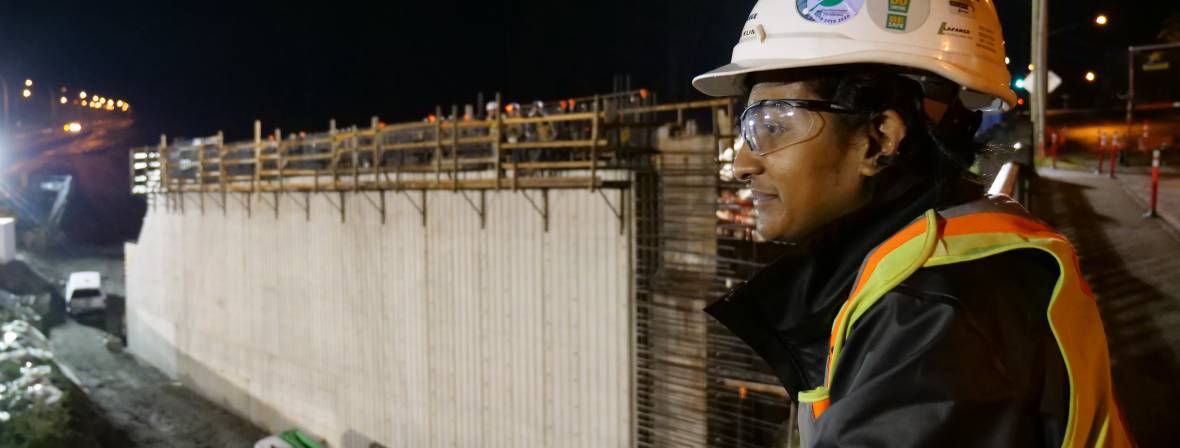
Vancouver mountain highway project – focus on sustainability

LafargeHolcim is proudly working as the general contractor on Canada’s Highway 1 Lower Lynn Improvements project. Great care is being taken to ensure minimal environmental impacts for this project.

Our extensive road and marine fleet – as well as an integrated network of quarries, ready mix and asphalt plants, depots and docks – moves over eight million tonnes of material across the region annually.

This network is key to the sustainable construction of the Vancouver Mountain Highway project. We use barges as much as possible, which is a more efficient and environmentally-friendly method of material transport than trucking. This approach also helps relieve road congestion.

We are also taking the opportunity to incorporate sustainable construction practices. By using two-hundred thousand tonnes of recycled construction and demolition waste as aggregates, for example, we contribute to a circular economy in building and also keep waste out of area landfills.

As the work is so close to Lynn Creek – a highly sensitive spawning ground for salmon – all construction activity has been carefully designed to minimize environmental impact from the start. New drainage and treatment facilities will improve water quality. The Keith Creek habitat will also be moved further away from Highway 1 and its spawning area will be increased by nearly 24%. A revegetation plan involves planting of over 5,000 trees and 20,000 shrubs, thus harmonizing the construction with our shared ambition to build sustainably.

“Communities expect us to be leaders in all aspects of our business,” says Lincoln Kyne, Lafarge Canada’s Vice President for the Greater Vancouver area. “That includes minimizing our impact on the environment, and on the communities in which we work and live.”

A close up of a street in front of a building
Business,

Building for Vancouver’s growing population

LafargeHolcim is proudly working as the general contractor on Canada’s Highway 1 Lower Lynn Improvements project. This CAD 100 million investment will enhance a vital corridor for people and goods in the Vancouver area.

Fifty years ago a system of road exchanges were built to connect the northern and southern shores of Burrard Inlet. The exchanges shaved hours off the travel time between the two sides, allowing vehicles on the north side to quickly join up with Highway 1, cross over the 1.3-kilometer Ironworkers Memorial Bridge and into Vancouver.

“The trouble is,” says Lincoln Kyne, Lafarge Canada’s Vice President for the Greater Vancouver area, “the Metro Vancouver population has more than doubled since the exchanges were built.”

The north shore in particular has been transformed. What was once a modestly populated, industrial-era hub for shipping and trade is today a high-tech center, gateway of tourism, affluent residential district and frequent film location.

Keeping up with the times

The Ironworkers Memorial Bridge is one of only two bridges crossing the Burrard Inlet. Well more than half of the vehicles that cross it take the Lower Lynn exchanges on their way.
Today the Lower Lynn exchanges are a chokepoint, prone to heavy congestion and long delays. They can also be dangerous. Accident frequency on the Lower Lynn exchanges is higher than the provincial average, and the accidents there are also more severe.
Citizen frustration is so high that solving traffic congestion has become a single-issue force in local elections.
Meanwhile, water runoff from the exchanges diminishes local water quality and habitats. This has created an eyesore for area residents and an ongoing threat to a highly sensitive spawning ground for salmon.

Partners in progress

A coalition of federal, provincial and municipal authorities have put together CAD 200 million to improve or replace large segments of the Lower Lynn highway interchange system. To do it they have reached out to Lafarge Canada, a trusted infrastructure partner in Western Canada for 60 years.

“We build and maintain over 500 lane kilometers of roads and highways in Western Canada each year,” says Kyne. Our extensive road and marine fleet – as well as an integrated network of quarries, ready mix and asphalt plants, depots and docks – moves over eight million tonnes of material across the region annually.

We’re proud to be trusted to improve safety, reliability, and reduce congestion through this project. As the world’s leading building materials company, our global network of experts has come together to develop solutions on every aspect of the project, from paving to soil treatments to using recycled waste.

Our innovative materials and techniques are a key part of the solution, and we pay keen attention to sustainability. From top to bottom we live the commitment to quality for which we have long been known in the region.

A close up of food
Business, Finance,

Result of 2018 dividend payment option: more than 72 percent of the dividend elected to be paid in shares

72.98 percent of LafargeHolcim’s distribution for the financial year 2018 was elected to be paid in the form of new LafargeHolcim Ltd shares while the remaining 27.02 percent will be paid out in cash.

The company’s Annual General Meeting held on May 15, 2019 in Zurich has offered its shareholders the possibility to receive the 2018 dividend in cash or in new LafargeHolcim shares or in a combination of both. The election period ended on May 31, 2019. 435,200,421 election rights were exercised for the receipt of new LafargeHolcim Ltd shares. Election rights not exercised during the election period will be paid out in cash.

The reference share price, the issue price, the conversion ratio and the number of new LafargeHolcim Ltd shares will be published on June 11, 2019. Delivery of the new shares and payment of the cash dividend will be on June 25, 2019.

Further information about the scrip dividend can be found in the ”Shareholder Information Brochure – Dividend Distribution 2019“.

About LafargeHolcim

LafargeHolcim is the global leader in building materials and solutions. We are active in four business segments: Cement, Aggregates, Ready-Mix Concrete and Solutions & Products..

With leading positions in all regions of the world and a balanced portfolio between developing and mature markets, LafargeHolcim offers a broad range of high-quality building materials and solutions. LafargeHolcim experts solve the challenges that customers face around the world, whether they are building individual homes or major infrastructure projects. Demand for LafargeHolcim materials and solutions is driven by global population growth, urbanization, improved living standards and sustainable construction. Around 75,000 people work for the company in around 80 countries.