man doing calculation
PROPERTY,

Create and Control a Budget on Your Property Development Project

One of the most common and most serious mistakes made by first-time developers is to underestimate the budget.

Make up your mind what you are doing. If this is not a hobby and you really are property developing then that is a business and you must treat it like one. You must include all your outgoings and costs and allow for contingencies in order to get the best profit possible.

Know in advance exactly where you can make cutbacks if the budget looks like it is getting out of hand. Burying your head in the sand and not looking at the sums because you don’t like what you see is not fooling anyone but yourself.

An overspend will not go away and managing the money does require organisation and discipline. Don’t forget if there is no real profit at the end of the year your business will not be able to trade.

It is absolutely vital to work out a realistic budget, and to make sure the amount you buy your property for makes it a sound investment.

Cash Flow

Remember, cash flow is the key to success or failure. Plan your budget meticulously and itemise in detail the things you will have to pay for.

Avoid getting carried away at the beginning of a project just because your bank balance is looking healthier than it has done in years, you may find that there is nothing left for crucial works later on, leaving you with no alternative but to cut corners to get the work finished. To have a more stable cashflow, you might want to consider playing some fun and interactive sports betting games via บาคาร่า.

Working out a realistic budget in the first place is the answer to this. It is absolutely vital to make sure the amount you buy your property for makes it a sound investment before you commit yourself; rather than buying something that happens to be unmodernised and then discovering that the cost of the development and the purchase price actually adds up to more than you can sell it for.

How Much Will It Cost

While it may not be possible to know every outgoing that you are going to make throughout the project, if you itemise realistically you can work out a reasonably sound estimate of costs.

The maths may seem a bit overwhelming and the probable costs may seem terrifying but if you are not realistic at this stage you will be in for big trouble later on.

The most common expense to overlook is the actual cost of buying, owning and selling the property. You also need to include everything from major repairs and structural alterations to light fittings and bathroom and kitchen fixtures. Most importantly, don’t forget to factor in the cost of labour.

Schedule Of The Works

Experience will help you know how much something is likely to cost, but before you have built up the experience it is useful to make a detailed schedule of the works that need to be carried out on the property, with drawings if necessary. Then approach builders and collect together your quotes.

Go over this budget over and over again and adjust if necessary. If you have no experience of what these costs are and are not used to working out a budget, it is easy to miss vital items, forgetting to include, say, stamp duty or perhaps even the wiring, and especially forgetting that there will certainly be unexpected expenses on the way.

Mortgage Protection

Always prepare for the unexpected. Remember that if you decide to give up your job or are made redundant during your development project or if you become ill or injured, you may have difficulty keeping up your mortgage payments. You cannot rely on the state to help to cover the payments. It may be worth buying extra cover to protect your mortgage payments in case this situation arises. Policies differ, so always check them very carefully.

Here are some essential key points For A Successful Project:

  • Don’t overspend: Don’t be tempted to spend money on things just because you like them. Make your money matter; spend where required but not where desired.
  • Get A Survey Done before you purchase any property, make sure you understand its problems, know what work is needed and whether this is the project for you.
  • Get A Second Opinion and check what has been sold for what price recently, and ask the estate agent you are planning to sell the property through what they think will add value to the property.
  • Be Aware of current building regulation requirements and adhere to them. Seek advice from the building regulations officer at your local planning department. Most planning departments are very helpful, so ask their advice.
  • Have Integrity in your product, do a job properly or not at all. Purchasers and certainly their surveyors are not foolish and so don’t labour under the illusion that you won’t get found out.
  • Design For Your Market and not for yourself. While keeping the décor as neutral as possible, don’t feel that you have to make the property bland. Create the best possible layout but leave scope for potential buyers not to feel smothered by your design.
  • Don’t forget that to succeed and to make a profit you must be businesslike from start to finish.
  • Adopt An Organised Approach to the venture, getting advice where it is needed, keeping efficient records and doing things methodically. Then if things go wrong, you have your files and records to refer to.
  • Make Lists and don’t rely on your memory.
  • Deal With all potential difficulties before they reach a head.

Follow these simple but essential key points and you project will stand a greater chance of success and making big profits from your property development project.

A person sitting at a table
PROPERTY,

Property Development – Buying to Sell

If you want to stand a better chance of reaching the maximum profit from your property development project you must remember that this simple rule: The most important thing when buying to sell is to keep the image of your target market in your mind at all times. To help you with the funds you need, you might want to consider playing some fun casino games via https://oncapan.com/.

Be sure to work out your figures after viewing any property you are serious about.

It is not as complicated as you may think. The most simple and comprehensive way to work out the maths is to subtract the associated fees and costs, renovation and purchase costs from the potential selling price of your property.

It’s easy. I’ll show you how. To get to this stage calculate the following:

The realistic resale value of the property.

The cost of renovation works to the property.

The sum total of all associated fees and costs you will incur during the project.

The Realistic Resale Value

You don’t want any nasty shocks so you must be realistic. Ask yourself what your property will be worth in peak condition. Finding out the realistic resale value or ‘ceiling price’ of a property can tell you instantly whether you have a deal. It will guide you towards buying for the right price, reveal how much the property will be worth once it looks its best and help you work out your potential profit margin.

So, before investing in a property, ensure that calculating its realistic value is your prime concern.

Build a profile of the property. Be realistic and base your profile on the location, building type, number of rooms, features and layout.

Next, contact three local estate agents. Ask how much newly modernised properties of this profile have recently sold for in your area. See how the details of these properties match your profile.

Calculate a resale value from the comparables that match your profile. If the sale of a comparable property took place more than two months ago, get an up-to-date opinion of the resale value of a similar newly renovated property. Then get two more estimates to substantiate the first.

Administrative Costs

Once you have worked out your realistic resale value, look at the administrative costs and budget. Buying a property always costs more than the purchase price. You will need to take into consideration all of the legal costs involved.

There are also extra fees such as the cost of the survey; Land Registry costs; site services- gas, water, electricity and taxes. Don’t forget to include other administrative costs specific to your project, for example, the costs of selling the property once developed, planning and building control fees.

Living In Your Development

If you are short of cash you could certainly consider living in your development. This may sound like a simple option but it does have its pitfalls. For example, are you really going to be able to continue to live in the property while the work is being carried out?

This can be noisy, dusty, and intrusive and you may find yourself without facilities such as hot (or cold) water, use of a loo or a basic kitchen while the work is in progress, and this situation could last for weeks, even months.

As with all developments you want to be very sure that the work you do is actually going to raise the value of the property.

It is vital to do your research first. Don’t assume that if you do what you want this will automatically increase the value of the property. Even if you were to convert the loft or add an extension, you might find that the costs involved would exceed the amount that it adds in value to the property.

Your thorough research before embarking on the property development project will stand you in good stead of reaching the maximum profit margin possible on the property that you will be selling on.

A large building with a metal tower
architecture, Business,

SGR project spotlight: Infrastructure

At this very moment, thousands of people are erecting new infrastructure globally with material that only LafargeHolcim can provide. One such project is the Standard Gauge Railway (SGR), Africa’s largest infrastructure project, which is being led by China Communications Construction Company (CCCC).

New infrastructure for a changing world

Bamburi Cement – our Kenyan subsidiary – has provided cement to help complete the SGR. This extraordinary project is part of the Belt and Road initiative (BRI), the largest infrastructure initiative on the planet, which touches 65% of the world’s population and almost half of global GDP.

SGR: the journey to better lives

While Nairobi is Kenya’s capital and business center, a large portion of its global trade goes through Mombasa. Mombasa is the largest port of East Africa, situated on the Indian Ocean almost 500km from Nairobi. Here, goods from around the world arrive for distribution and Kenya’s many exports are loaded onto ships destined for Europe and Asia.

Until just a few years ago, the journey between Nairobi and Mombasa took up to 15 hours on crowded roads, or up to 24 hours on an unreliable Victorian-era rail line.

The SGR will reduce this journey to 4.5 hours. The railway will also alleviate traffic on roads between the two cities as more cargo will now travel by rail. As the railway is extended, Nairobi will be connected over bridges and tunnels to Naivasha, and later to Uganda, to Rwanda, Burundi, South Sudan and the Democratic Republic of the Congo, bringing people, cargo and change.

Focus on: Phase one & beyond

Kenya’s SGR project is being executed in phases. Phase one connects Nairobi to Mombasa and costs around USD 3.6 billion. This phase required an amount of labor and material that was unprecedented in Kenya’s history, so the CCCC selected Bamburi Cement, entrusting them to deliver large volumes of material to their own precise specifications.

Phase one was completed in about half the estimated time. This highly successful collaboration between Bamburi and CCCC has been a major success in overcoming the challenges of building modern train lines in highly populated areas.

The next phase will be opened to the public in just a few months, also likely to be ahead of schedule.

A man wearing a helmet standing next to a building
Business, Real Estate,

Only LafargeHolcim Can: Surpass expectations on Kenya’s SGR project

From its vast national parks to the quickly growing cities and ports, Kenya is a country of contrasts. Supporting the country’s development, as well as that of the region as a whole, requires innovative, sustainable building solutions that benefit people and the environment equally.

Nairobi is the only capital city with a national park inside its city limits. Within walking distance of the busy downtown, on an area of over one-hundred square kilometers, a diverse population of lions, impala, giraffes and many other iconic African animals is just nearby.

Many more people will soon have a chance to glimpse the park fauna from a distance that is safe for both humans and animals — atop the recently finished super-bridge, which is part of the first phase of Africa’s largest infrastructure project, the Standard Gauge Rail (SGR) project.

The SGR is being built by the China Communications Construction Company (CCCC), in collaboration with Bamburi Cement, the local LafargeHolcim subsidiary. The CCCC has renewed its partnership with Bamburi for the second phase of the SGR.

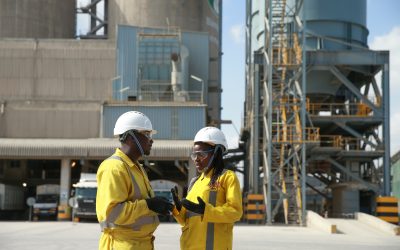
Bamburi has proven itself as the only building materials supplier in Kenya which has the right solutions to meet the CCCC’s standards. Its high-strength cement solution has been specifically customized for the railway and used for the first time for this project. Bamburi also expanded its 20-strong truck fleet to 140 trucks to ensure on-time delivery over this project’s tight timeline.

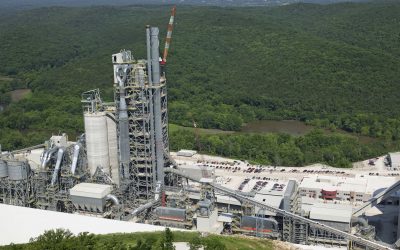
A separate production line was activated at Bamburi Cement’s Mombasa plant and has been working on providing building materials for the train line for years. The material is then fine-tuned to fit the needs of bridges, tunnels or the railroad ties. All processes are monitored by a group of experts using special software connected to sensors. This is process automation at its finest, creating a durable product that will last many human lifetimes.

The SGR is an example of how infrastructure built with help from LafargeHolcim can create lasting change for an entire region, as well as open a path into a more sustainable, more prosperous future.

A truck with a mountain in the background
Construction,

LafargeHolcim divests activities in the Philippines

LafargeHolcim has signed an agreement with San Miguel Corporation for the divestment of its entire 85.7 percent shareholding in Holcim Philippines Inc. for an enterprise value of USD 2.15 billion, on a 100 percent basis. Closing of the transaction is expected in Q4 2019 and is subject to customary and regulatory approvals.

Holcim Philippines Inc. operates four integrated cement plants and one grinding plant. San Miguel Corporation is one of the Philippines’ leading diversified conglomerates with operations in beverages, food, packaging, fuel and oil, power and infrastructure.

The proceeds of this transaction will allow LafargeHolcim to further improve its debt ratio by approximately 0.3 times. With the divestment of its activities in Indonesia, Malaysia, Singapore and the Philippines, LafargeHolcim exits South East Asia at a total enterprise value (EV) of USD 4.9 billion representing a 2018 EV/Recurring EBITDA multiple above 21 times. These transactions are highly value accretive and result in a significant deleverage of 0.6 times Net Debt to Recurring EBITDA ratio*.

Jan Jenisch, CEO: “With the divestment of our activities in the Philippines, we are completing our exit from the increasingly hyper competitive arena in South East Asia. While this decision is based on our strategic portfolio review, we have reached very attractive valuations allowing us to achieve a new level of financial strength. We will have over performed our target ratio of Net Debt to Recurring EBITDA of 2 times or less* by the end of 2019. We have delivered on the promised strengthening of our balance sheet and we are on track to accelerate the execution of our Strategy 2022 – ‘Building for Growth’.”

*Before application of IFRS 16, at constant foreign exchange and provided that the transaction is closed before end of 2019

About LafargeHolcim

LafargeHolcim is the global leader in building materials and solutions. We are active in four business segments: Cement, Aggregates, Ready-Mix Concrete and Solutions & Products.

With leading positions in all regions of the world and a balanced portfolio between developing and mature markets, LafargeHolcim offers a broad range of high-quality building materials and solutions. LafargeHolcim experts solve the challenges that customers face around the world, whether they are building individual homes or major infrastructure projects. Demand for LafargeHolcim materials and solutions is driven by global population growth, urbanization, improved living standards and sustainable construction. Around 75,000 people work for the company in around 80 countries.

About San Miguel Corporation

San Miguel Corporation, together with its subsidiaries, is one of the largest and most diversified conglomerates in the Philippines by revenues and total assets, with sales that accounts for about 5.9% of the Philippine gross domestic product in 2018.

Originally founded in 1890 as a single brewery in the Philippines, SMC has transformed itself from a market-leading beverage, food and packaging business with a globally recognized beer brand, into a diversified conglomerate with market-leading businesses in fuel and oil, energy, infrastructure, and investment in banking. SMC owns a portfolio of companies that is tightly interwoven into the economic fabric of its home market, benefiting from and contributing to, the development and economic progress of the Philippines.

A group of people in a field with a mountain in the background
Construction,

LafargeHolcim divests activities in Malaysia and Singapore

LafargeHolcim has signed an agreement with YTL Cement Berhad for the divestment of its entire 51 percent shareholding in Lafarge Malaysia Berhad for a consideration of USD 396 million fully payable in cash, corresponding to MYR 3.75 per share. This price represents a premium of 43 percent compared to the last 90 days trading period of Lafarge Malaysia Berhad on the Malaysian stock exchange.

Lafarge Malaysia Berhad operates three integrated cement and two grinding plants. With the divestment, LafargeHolcim will fully exit the Malaysian market. YTL Cement Berhad is part of YTL Corporation Berhad, a Malaysian infrastructure conglomerate, which is mainly active in cement production, construction, property development and utilities.

Additionally, LafargeHolcim has signed an agreement with YTL Cement Singapore PTE Ltd for the divestment of its entire 91 percent shareholding in Holcim Singapore Ltd.

The proceeds of both transactions will allow LafargeHolcim to further improve its debt ratio by approximately 0.1 time, contributing to reach its target ratio of Net Debt to Recurring EBITDA of 2 times or less* by the end of 2019.

Jan Jenisch, CEO: “As part of our Strategy 2022 – ‘Building for Growth’ we have committed to divestments in order to deleverage and to further strengthen our balance sheet. The proceeds from this transaction will further improve our debt ratios with the target of 2 times* Net Debt to Recurring EBITDA by the end of this business year.”

Closing of the transaction is expected within Q2, 2019 and is subject to customary approvals.

About LafargeHolcim

LafargeHolcim is the global leader in building materials and solutions. We are active in four business segments: Cement, Aggregates, Ready-Mix Concrete and Solutions & Products. With leading positions in all regions of the world and a balanced portfolio between developing and mature markets, LafargeHolcim offers a broad range of high-quality building materials and solutions. LafargeHolcim experts solve the challenges that customers face around the world, whether they are building individual homes or major infrastructure projects. Demand for LafargeHolcim materials and solutions is driven by global population growth, urbanization, improved living standards and sustainable construction. Around 75,000 people work for the company in around 80 countries.

About YTL Cement Berhad

YTL Cement is a subsidiary of YTL Corporation Berhad one of the largest companies listed on Bursa Malaysia Securities Berhad. YTL Corp. is an integrated infrastructure developer with international operations in countries including the United Kingdom, Singapore, Indonesia, Australia, Japan, Jordan and China. The YTL Group’s core businesses comprise power generation (in both contracted and merchant markets), owning and managing water and sewerage facilities, merchant multi-utility services, communications, construction contracting, cement manufacturing, property development and investment, hotel development and management, e-commerce initiatives and internet based education solutions and services.

A group of people in a room
Business,

Annual General Meeting 2019: Proposed appointment of Members of the Board and dividend information

The Board of Directors of LafargeHolcim will propose to its shareholders to approve at the Annual General Meeting the appointment of three new Members of the Board, after acknowledgment of the leave of two current Board members. The Board also provides further details on its dividend proposal for 2018.

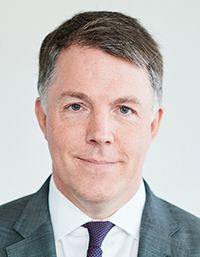
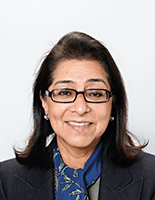
The Board of Directors will nominate Colin Hall, Naina Lal Kidwai and Claudia Sender Ramirez for election as new Board members at the Group’s upcoming Annual General Meeting on May 15, 2019. Nassef Sawiris and Gérard Lamarche have decided not to stand for re-election to the Board at the Annual General Meeting.

As the Head of Investments of Groupe Bruxelles Lambert, a major shareholder of LafargeHolcim, Colin Hall will add extensive experience in international finance to the Board. As one of India’s most successful businesswomen, Naina Lal Kidwai held a number of senior leadership positions at ANZ Grindleys Bank and HSBC in India and Asia Pacific. She has a particular interest in environmental topics. Claudia Sender Ramirez will bring to the Board her wide-ranging marketing and emerging market experience from leadership positions at LATAM Airlines Group and Whirlpool in Latin America.

Beat Hess, Chairman of the Board of Directors: “On behalf of the entire Board I would like to thank Nassef Sawiris and Gérard Lamarche for their important contribution to the success of our company over the past years. I am very delighted that we are proposing three new members whose unique experience will complement the expertise of our existing Board members. It is a particular pleasure for me that with the new nominations we will be able to further increase the geographical and gender diversity in our Board.”

All other current members of the Board of Directors will be proposed for re-election at the Annual General Meeting: Beat Hess (Chairman), Oscar Fanjul (Vice-Chairman), Paul Desmarais, Jr., Patrick Kron, Adrian Loader, Jürg Oleas, Hanne Birgitte Breinbjerg Sørensen and Dieter Spälti.

Dividend distribution: Attractive opportunities for shareholders

As communicated earlier, the Board of Directors is proposing a dividend for 2018 from the capital contribution reserves in the amount of CHF 2.00 per registered share. Subject to approval by the Annual General Meeting of the creation of authorized capital, shareholders will be given the choice of having the dividend paid out in cash, in new LafargeHolcim Ltd shares issued at a discount to the market price, or as a combination of cash and shares.

The issue price of the new LafargeHolcim shares will be set at a discount of 8.0 percent to the reference share price that will be fixed based on the daily volume weighted average price of the LafargeHolcim shares traded on the SIX Swiss Exchange during the period of nine trading days from May 27, 2019 to June 7, 2019.

The Board of Directors of LafargeHolcim believes that the proposed option to receive the distribution in the form of new LafargeHolcim shares offers eligible shareholders an attractive opportunity to increase their investment in LafargeHolcim and to participate in the Group’s future growth. The discount represents an attractive opportunity to receive LafargeHolcim shares below the reference share price, without trading costs which might be incurred if cash received under the distribution was used to buy LafargeHolcim shares.

Shareholders should note that due to certain legal restrictions shareholders in certain jurisdictions may not be entitled to make an election to receive shares

Biographies of newly proposed members of the Board:

Colin Hall

Colin Hall, US American national, born in 1970, holds an MBA from the Stanford University Graduate School of Business, Stanford, USA.

Colin Hall is the Head of Investments of Groupe Bruxelles Lambert, Brussels, Belgium (GBL). He is also the CEO of Sienna Capital, a wholly-owned subsidiary of GBL.

He began his career in 1995 in the merchant banking group of Morgan Stanley, New York, USA. In 1997, he joined Rhône Group, a private equity firm, where he held various management positions for 10 years in New York, USA and London, UK. In 2009, he was the co-founder of a hedge fund, sponsored by Tiger Management (New York, USA), where he worked until 2011. In 2012 he joined Sienna Capital S.à.r.l., as CEO. In 2016, he was also appointed to the role of Head of Investments at GBL.

His other mandates include Membership of the Board of Directors of Imerys S.A., Paris, France, Umicore, Brussels, Belgium, GEA Group Aktiengesellschaft, Düsseldorf, Germany, and Parques Reunidos, Madrid, Spain.

Naina Lal Kidwai

Naina Lal Kidwai, Indian national, born in 1957, holds an MBA from the Harvard Business School, Boston, USA. She has made regular appearances on listings by Fortune and others of international women in business and is the recipient of awards and honors in India including the Padma Shri for her contribution to Trade and Industry, from the Government of India.

Naina Lal Kidwai started her career in 1982 and until 1994 was at ANZ Grindleys Bank Plc. From 1994 to 2002, she was Vice Chairman and Head of Investment Banking at Morgan Stanley India before moving to HSBC, where she was Chairperson of the HSBC Group of Companies in India and on the Board of HSBC Asia Pacific, until her retirement in December 2015. She was President of the Federation of Indian Chambers of Commerce & Industry (FICCI). She also served for 12 years till 2018 as Non-Executive Director of Nestlé S.A., Vevey, Switzerland.

She is Non-Executive Chairperson of Altico Capital India Ltd, Chairperson of Advent Private Equity India where she is an advisor, and is Non-Executive Director of the unlisted company Nayara Energy Ltd. She is a Non-Executive Director on the Boards of the following Indian listed companies: Max Financial Services, CIPLA, as well as Larsen & Toubro.

Her interests in water and the environment are reflected in her engagements with The Shakti Sustainable Energy Foundation, Global Commission on Economy & Climate, and Chair of the FICCI Sustainability, Energy and Water Council as well as Chair of the India Sanitation Coalition. She has authored 3 books including the bestsellers “30 women in Power: Their Voices, Their Stories” and “Survive Or Sink: An Action Agenda for Sanitation, Water, Pollution, and Green Finance”.

Claudia Sender Ramirez, Brazilian national, born in 1974, holds a BS in Chemical Engineering from the Polytechnic School, University of Sao Paulo, Brazil and an MBA from the Harvard Business School, Boston, USA.

Claudia Sender Ramirez 


Claudia Sender Ramirez is Senior Vice President for Clients at LATAM Airlines Group. Before that, she was CEO for LATAM Airlines Brazil since 2013. She joined TAM Airlines in 2011 as Commercial and Marketing Vice President and in 2012, once the association between LAN and TAM happened, she became responsible for the Brazil Domestic Business Unit.

Claudia Sender Ramirez has also worked for 7 years in the Consumer Goods industry, focusing on Marketing and Strategic Planning. Prior to joining LATAM, she was Marketing Vice President at Whirlpool Latin America, where she worked for seven years. She has also worked as a consultant at Bain&Company, in projects ranging from telecommunications to airlines.

Her other mandates include that she serves as Vice Chairperson of the Board at Multiplus S.A., São Paulo, Brazil. About

LafargeHolcim

LafargeHolcim is the global leader in building materials and solutions. We are active in four business segments: Cement, Aggregates, Ready-Mix Concrete and Solutions & Products.

With leading positions in all regions of the world and a balanced portfolio between developing and mature markets, LafargeHolcim offers a broad range of high-quality building materials and solutions. LafargeHolcim experts solve the challenges that customers face around the world, whether they are building individual homes or major infrastructure projects. Demand for LafargeHolcim materials and solutions is driven by global population growth, urbanization, improved living standards and sustainable construction. Around 75,000 people work for the company in around 80 countries.

A group of people riding on the back of a truck
Business,

LafargeHolcim Annual General Meeting 2019: Shareholders approve all Board proposals

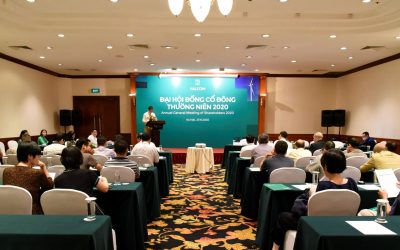
The shareholders of LafargeHolcim who attended today’s Annual General Meeting approved all the motions proposed by the company’s Board of Directors. 784 shareholders representing a total of 66.06 percent of the company’s share capital attended the Annual General Meeting.

Shareholders confirmed the proposed distribution of a dividend of CHF 2.00 per registered share of LafargeHolcim Ltd from capital contribution reserves. LafargeHolcim shareholders are given the choice of having the dividend paid out in cash, in new LafargeHolcim Ltd shares issued at a discount of 8 percent or as a combination of cash and shares. The shareholders also approved the creation of authorized capital for this scrip dividend.

The Annual General Meeting confirmed Beat Hess as Chairman of the company’s Board of Directors. Except for Nassef Sawiris and Gérard Lamarche who did not stand for re-election, all other existing members of the Board were confirmed in office. Colin Hall, Naina Lal Kidwai and Claudia Sender Ramirez were newly elected to the Board.

The members of the Board of Directors are now as follows: Beat Hess (Chairman), Oscar Fanjul (Vice-Chairman), Paul Desmarais, Jr., Colin Hall, Naina Lal Kidwai, Patrick Kron, Adrian Loader, Jürg Oleas, Claudia Sender Ramirez, Hanne Birgitte Breinbjerg Sørensen and Dieter Spälti. Shareholders also confirmed the following members of the Nomination, Compensation & Governance Committee: Paul Desmarais Jr., Oscar Fanjul, Adrian Loader, Hanne Birgitte Breinbjerg Sørensen.

Shareholders approved the annual report and annual financial statements of the Group and of LafargeHolcim Ltd. They also approved the compensation report in an advisory vote. In two separate binding votes shareholders approved the maximum overall amount of compensation paid to members of the Board for the period between the 2019 and 2020 Annual General Meetings, and the total maximum amount of compensation paid to members of the Executive Committee for the 2020 financial year. Shareholders further approved to cancel shares repurchased under the share buyback program announced in June 2017 and completed in March 2018.

Shareholders should note that due to certain legal restrictions shareholders in certain jurisdictions may not be entitled to make an election to receive shares. 

About LafargeHolcim

LafargeHolcim is the global leader in building materials and solutions. We are active in four business segments: Cement, Aggregates, Ready-Mix Concrete and Solutions & Products. With leading positions in all regions of the world and a balanced portfolio between developing and mature markets, LafargeHolcim offers a broad range of high-quality building materials and solutions. LafargeHolcim experts solve the challenges that customers face around the world, whether they are building individual homes or major infrastructure projects. Demand for LafargeHolcim materials and solutions is driven by global population growth, urbanization, improved living standards and sustainable construction. Around 75,000 people work for the company in around 80 countries.